
Information about #F6973C color

Basic facts about this digital color
A maximally vivid amber-leaning orange, #F6973C appears airy and pastel-like. Designers typically reach for tones like this for clean interfaces where content needs room to breathe. In The Official Register of Color Names it is a hair away from Spring Orange (#FD963D). Its next-closest registered neighbors are Royal Orange (#F99245) and Yellow Sea (#F49F35).
In RGB terms — rgb(246, 151, 60) — the red channel does the heavy lifting here. If you plan to put text on a #F6973C background, choose black — the contrast ratio is 9.4:1 (passing WCAG AAA), while white manages only 2.2:1. Like most of the 16.7 million digital colors, this one is still waiting for a name — naming it takes a minute.
#F6973C color variations
View this color variations of tints, shades, tones and hues.
#F6973C color tints
Tints look brighter, pastel, and less intense.
#F6973C color shades
Shades look darker, richer, and more solid.
#F6973C color tones
Tones looks more sophisticated and complex than base colors.
#F6973C color hues
A hue refers to the basic neighbors of color and is variation of base color on the color wheel.
#F6973C color harmonies
Color harmonies are pleasing color schemes created according to their position on a color wheel.
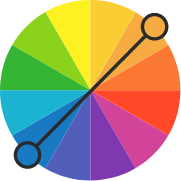
Complementary
Complementary color schemes are made by picking two opposite colors con the color wheel. They appear vibrant near to each other.
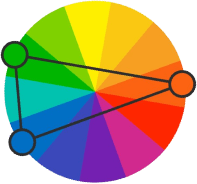
Split complementary
Split complementary schemes are like complementary but they uses two adiacent colors of the complement. They are more flexible than complementary ones.
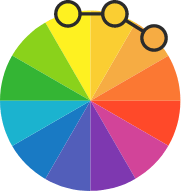
Analogous
Analogous color schemes are made by picking three colors that are next to each other on the color wheel. They are perceived as calm and serene.
Triadic
Triadic color schemes are created by picking three colors equally spaced on the color wheel. They appear quite contrasted and multicolored.

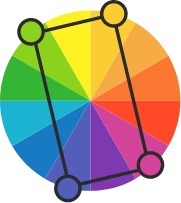
Tetradic
Tetradic color schemes are made form two couples of complementary colors in a rectangular shape on the color wheel.
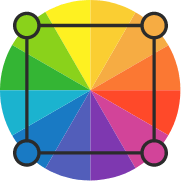
Square
Square color schemes are like tetradic arranged in a square instead of rectangle. Colors appear even more contrasting.
Alternatives to #F6973C color
View adjacent and very similar colors.
Nearest named colors to #F6973C
The closest officially registered color names in the Register, ordered by similarity — your shade’s neighborhood is already being claimed.

#FD963D
#F99245
#F49F35
#FF9E3D
#EF8E38
#FF9933
#EF9548
#F7A233
#E99B41
#FA9D49
#FFA343
#E69B3A
#F6973C color backgrounds & wallpapers
Download color wallpaper / background for your Desktop PC, Tablet or Mobile phone.


Conversions between color systems and etc.
- HEX#F6973C
- RGB246, 151, 60
- CMYK0, 39, 76, 4
- CSSrgb(246, 151, 60)
- HSL29°, 91%, 60%
- HSL Precise29.355°, 91.176%, 60%
- HSV29°, 76%, 96%
- HSB29°, 76%, 96%
- Normalized R (0.0–1.0)0.965
- Normalized G (0.0–1.0)0.592
- Normalized B (0.0–1.0)0.235
- GLSLvec3(0.965, 0.592, 0.235)
- GLSL with alphavec4(0.965, 0.592, 0.235, 1.000)
- HLSL / Metalfloat3(0.965, 0.592, 0.235)
- Percentage of Red in RGB96.5%
- Percentage of Green in RGB59.2%
- Percentage of Blue in RGB23.5%
- Color FamilyOrange
- Saturation FamilyFull Saturation
- Lightness FamilyVery Light
- HEX IDF6973C
- DECIMAL ID16160572
- Name LengthThis color has no name
- Seen by search & AI crawlers23 times
- Counting from2025-01-01
