
Information about #E7CF9C color
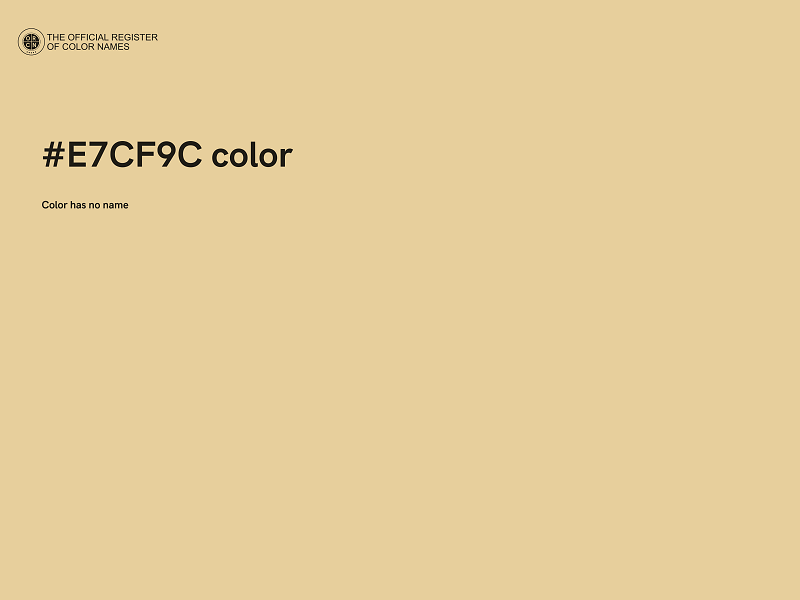
Basic facts about this digital color
A vivid, lively warm orange, #E7CF9C floats near the light end of the scale. Designers typically reach for tones like this for clean interfaces where content needs room to breathe. In The Official Register of Color Names it is a hair away from Chamois (#E8CD9A). Nearby in the Register you will also find Double Colonial White (#E4CF99) and Cookie (#E6CEA0).
Technically, the mix leans on its red channel (rgb(231, 207, 156)), which gives #E7CF9C its character. If you plan to put text on a #E7CF9C background, choose black — the contrast ratio is 13.8:1 (passing WCAG AAA), while white manages only 1.5:1. Out of 16,777,216 possible colors, #E7CF9C is still unnamed — it can be claimed and named in The Official Register of Color Names.
#E7CF9C color variations
View this color variations of tints, shades, tones and hues.
#E7CF9C color tints
Tints look brighter, pastel, and less intense.
#E7CF9C color shades
Shades look darker, richer, and more solid.
#E7CF9C color tones
Tones looks more sophisticated and complex than base colors.
#E7CF9C color hues
A hue refers to the basic neighbors of color and is variation of base color on the color wheel.
#E7CF9C color harmonies
Color harmonies are pleasing color schemes created according to their position on a color wheel.
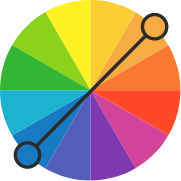
Complementary
Complementary color schemes are made by picking two opposite colors con the color wheel. They appear vibrant near to each other.
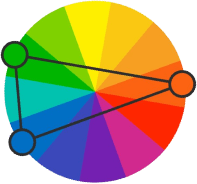
Split complementary
Split complementary schemes are like complementary but they uses two adiacent colors of the complement. They are more flexible than complementary ones.
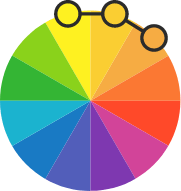
Analogous
Analogous color schemes are made by picking three colors that are next to each other on the color wheel. They are perceived as calm and serene.
Triadic
Triadic color schemes are created by picking three colors equally spaced on the color wheel. They appear quite contrasted and multicolored.

Tetradic
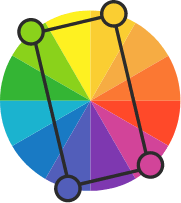
Tetradic color schemes are made form two couples of complementary colors in a rectangular shape on the color wheel.
Square
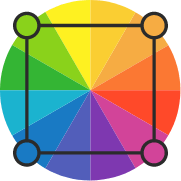
Square color schemes are like tetradic arranged in a square instead of rectangle. Colors appear even more contrasting.
Alternatives to #E7CF9C color
View adjacent and very similar colors.
Nearest named colors to #E7CF9C
The closest officially registered color names in the Register, ordered by similarity — your shade’s neighborhood is already being claimed.

#E8CD9A
#E4CF99
#E6CEA0
#E0CB9F
#EBC79E
#EDD2A4
#EFC99F
#EAD895
#EEC7A2
#F1D79E
#DEC7A1
#E1D5A6
#E7CF9C color backgrounds & wallpapers
Download color wallpaper / background for your Desktop PC, Tablet or Mobile phone.


Conversions between color systems and etc.
- HEX#E7CF9C
- RGB231, 207, 156
- CMYK0, 9, 29, 9
- CSSrgb(231, 207, 156)
- HSL41°, 61%, 76%
- HSL Precise40.8°, 60.976%, 75.882%
- HSV41°, 32%, 91%
- HSB41°, 32%, 91%
- Normalized R (0.0–1.0)0.906
- Normalized G (0.0–1.0)0.812
- Normalized B (0.0–1.0)0.612
- GLSLvec3(0.906, 0.812, 0.612)
- GLSL with alphavec4(0.906, 0.812, 0.612, 1.000)
- HLSL / Metalfloat3(0.906, 0.812, 0.612)
- Percentage of Red in RGB90.6%
- Percentage of Green in RGB81.2%
- Percentage of Blue in RGB61.2%
- Color FamilyOrange
- Saturation FamilyHigh Saturation
- Lightness FamilyVery Light
- HEX IDE7CF9C
- DECIMAL ID15191964
- Name LengthThis color has no name
- Seen by search & AI crawlers33 times
- Counting from2025-01-01
