
Information about #AF63DC color

Basic facts about this digital color
#AF63DC presents itself as a energetic, saturated twilight violet — one that floats near the light end of the scale. It is a natural fit for clean interfaces where content needs room to breathe. In The Official Register of Color Names it is very close to Julie's Lavender (#A767D5). Nearby in the Register you will also find Rich Lilac (#B666D2) and Rich Lavender (#A76BCF).
In RGB terms — rgb(175, 99, 220) — the blue channel does the heavy lifting here. If you plan to put text on a #AF63DC background, choose black — the contrast ratio is 5.6:1 (passing WCAG AA), while white manages only 3.7:1. #AF63DC has no official name yet. If this shade means something to you, you can be the one to name it.
#AF63DC color variations
View this color variations of tints, shades, tones and hues.
#AF63DC color tints
Tints look brighter, pastel, and less intense.
#AF63DC color shades
Shades look darker, richer, and more solid.
#AF63DC color tones
Tones looks more sophisticated and complex than base colors.
#AF63DC color hues
A hue refers to the basic neighbors of color and is variation of base color on the color wheel.
#AF63DC color harmonies
Color harmonies are pleasing color schemes created according to their position on a color wheel.
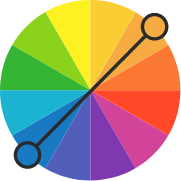
Complementary
Complementary color schemes are made by picking two opposite colors con the color wheel. They appear vibrant near to each other.
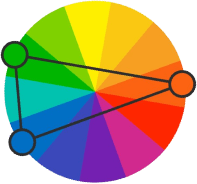
Split complementary
Split complementary schemes are like complementary but they uses two adiacent colors of the complement. They are more flexible than complementary ones.
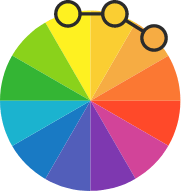
Analogous
Analogous color schemes are made by picking three colors that are next to each other on the color wheel. They are perceived as calm and serene.
Triadic
Triadic color schemes are created by picking three colors equally spaced on the color wheel. They appear quite contrasted and multicolored.

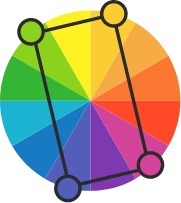
Tetradic
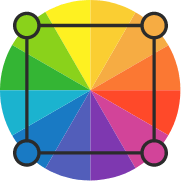
Tetradic color schemes are made form two couples of complementary colors in a rectangular shape on the color wheel.
Square
Square color schemes are like tetradic arranged in a square instead of rectangle. Colors appear even more contrasting.
Alternatives to #AF63DC color
View adjacent and very similar colors.
Nearest named colors to #AF63DC
The closest officially registered color names in the Register, ordered by similarity — your shade’s neighborhood is already being claimed.

#A767D5
#B666D2
#A76BCF
#A16AD1
#BA55D3
#AF51E7
#A552E6
#9966CC
#A55AF4
#966FD6
#9C51E7
#C251E7
#AF63DC color backgrounds & wallpapers
Download color wallpaper / background for your Desktop PC, Tablet or Mobile phone.


Conversions between color systems and etc.
- HEX#AF63DC
- RGB175, 99, 220
- CMYK20, 55, 0, 14
- CSSrgb(175, 99, 220)
- HSL278°, 63%, 63%
- HSL Precise277.686°, 63.351%, 62.549%
- HSV278°, 55%, 86%
- HSB278°, 55%, 86%
- Normalized R (0.0–1.0)0.686
- Normalized G (0.0–1.0)0.388
- Normalized B (0.0–1.0)0.863
- GLSLvec3(0.686, 0.388, 0.863)
- GLSL with alphavec4(0.686, 0.388, 0.863, 1.000)
- HLSL / Metalfloat3(0.686, 0.388, 0.863)
- Percentage of Red in RGB68.6%
- Percentage of Green in RGB38.8%
- Percentage of Blue in RGB86.3%
- Color FamilyViolet
- Saturation FamilyHigh Saturation
- Lightness FamilyVery Light
- HEX IDAF63DC
- DECIMAL ID11494364
- Name LengthThis color has no name
- Seen by search & AI crawlers30 times
- Counting from2025-01-01
