
Information about #A65838 color
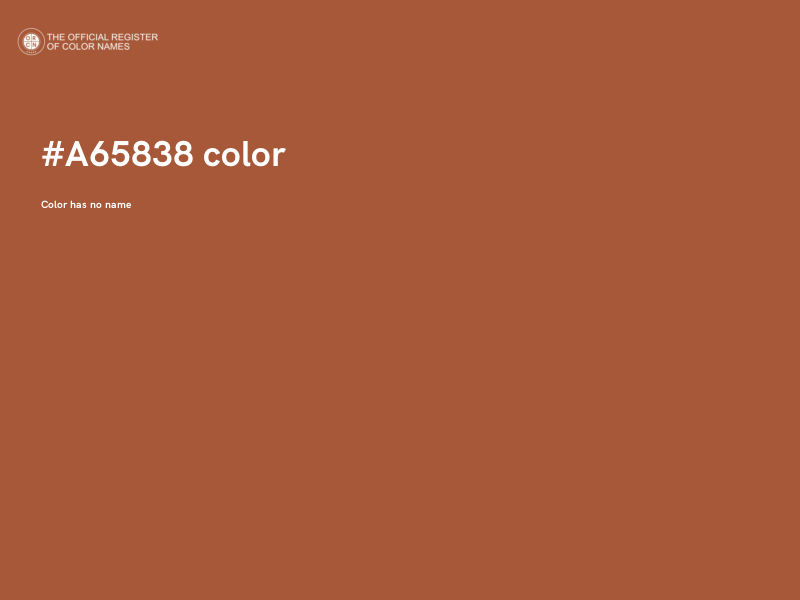
Basic facts about this digital color
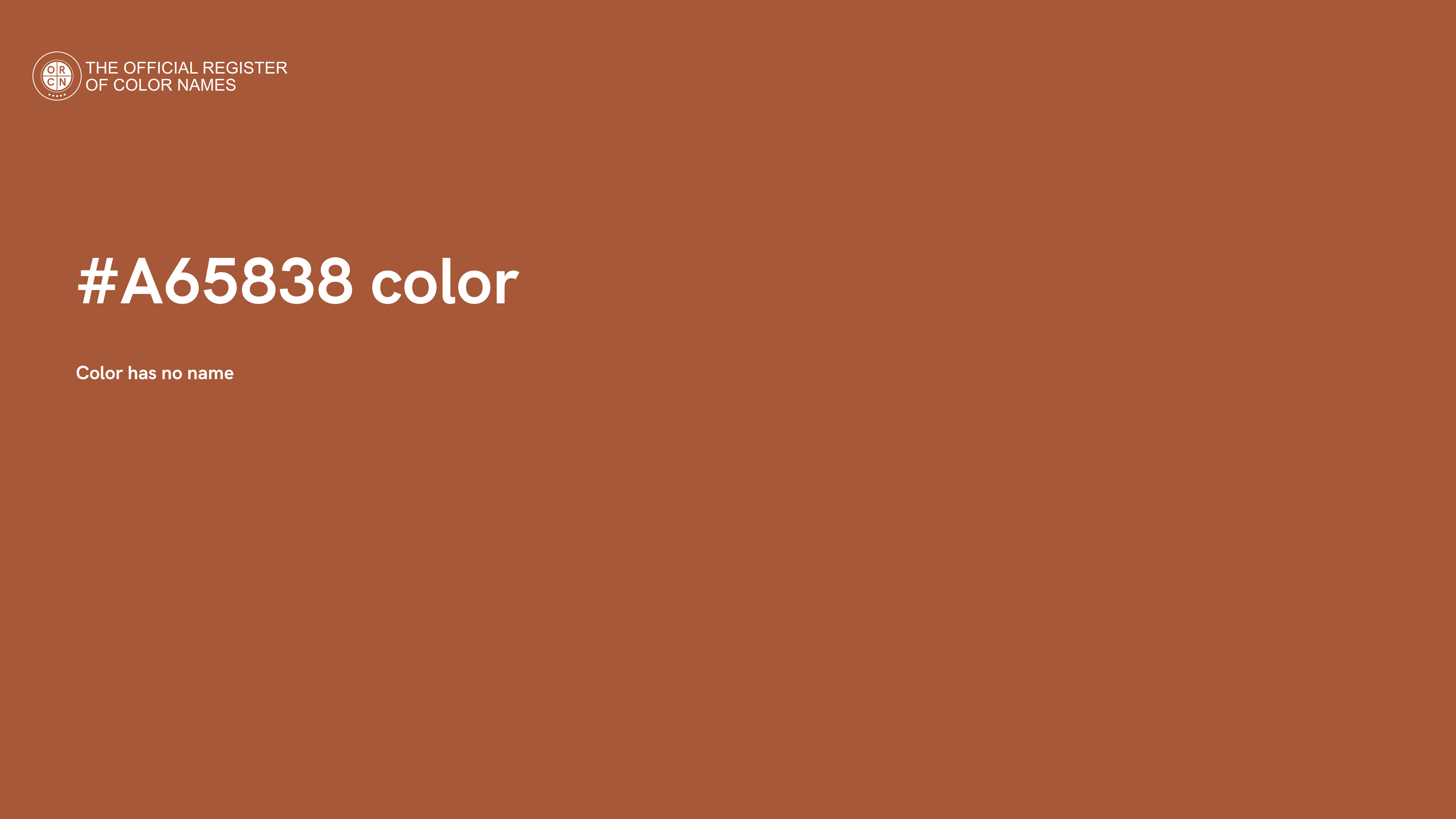
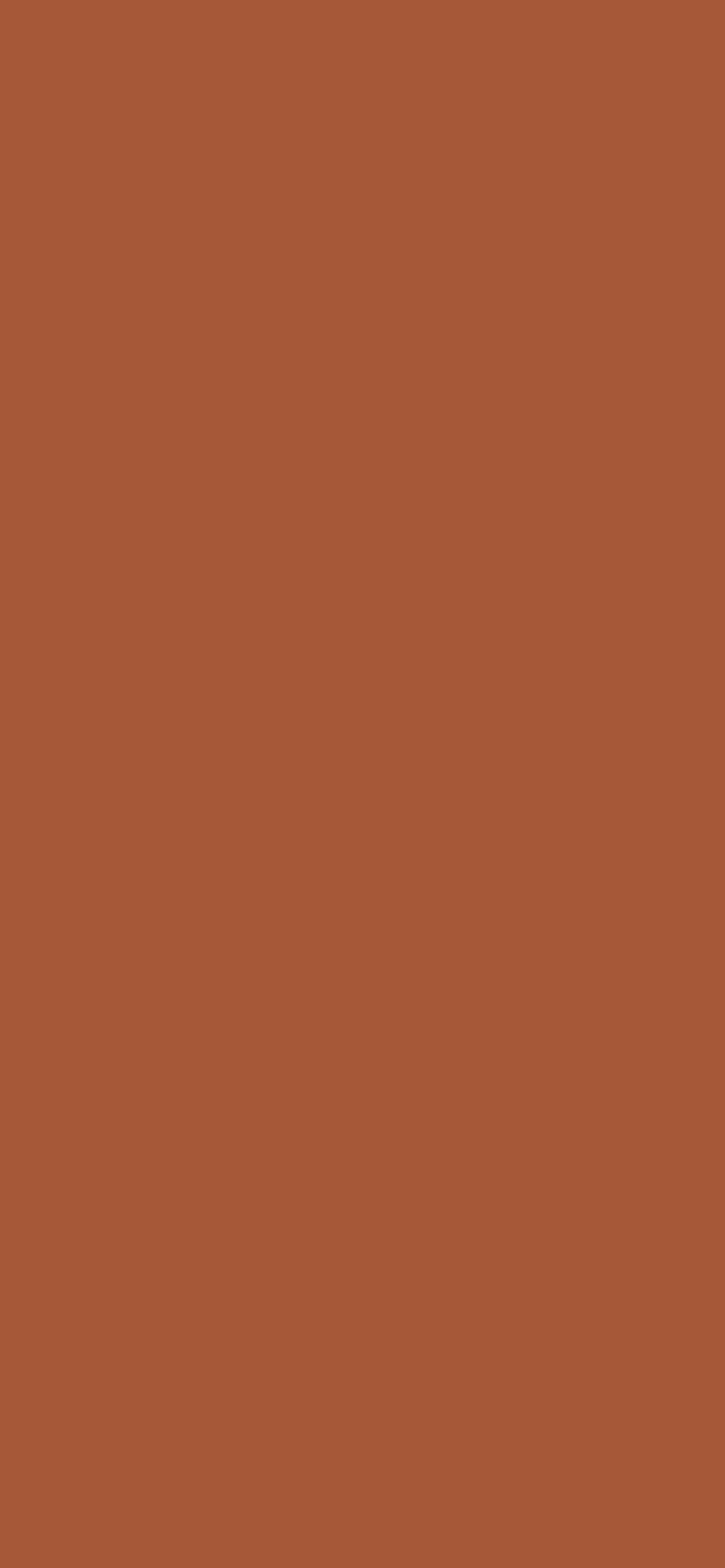
A confidently colored amber-leaning orange, #A65838 feels open and friendly. Expect to see shades like this in versatile mid-ground roles, from cards to secondary buttons. In The Official Register of Color Names it is practically indistinguishable from Orange Roughy (#A85335). Its next-closest registered neighbors are Vesuvius (#A85533) and Footloose (#A4613A).
The recipe behind #A65838 is rgb(166, 88, 56), with red as the dominant ingredient. Accessibility-wise, white text works best on #A65838: 5.2:1 contrast (passing WCAG AA) versus 4.1:1 for black. Out of 16,777,216 possible colors, #A65838 is still unnamed — it can be claimed and named in The Official Register of Color Names.
#A65838 color variations
View this color variations of tints, shades, tones and hues.
#A65838 color tints
Tints look brighter, pastel, and less intense.
#A65838 color shades
Shades look darker, richer, and more solid.
#A65838 color tones
Tones looks more sophisticated and complex than base colors.
#A65838 color hues
A hue refers to the basic neighbors of color and is variation of base color on the color wheel.
#A65838 color harmonies
Color harmonies are pleasing color schemes created according to their position on a color wheel.
Complementary
Complementary color schemes are made by picking two opposite colors con the color wheel. They appear vibrant near to each other.
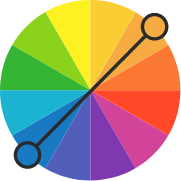
Split complementary
Split complementary schemes are like complementary but they uses two adiacent colors of the complement. They are more flexible than complementary ones.
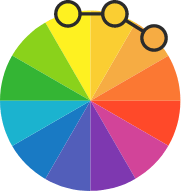
Analogous
Analogous color schemes are made by picking three colors that are next to each other on the color wheel. They are perceived as calm and serene.
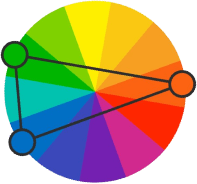
Triadic
Triadic color schemes are created by picking three colors equally spaced on the color wheel. They appear quite contrasted and multicolored.

Tetradic
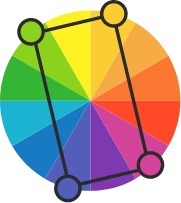
Tetradic color schemes are made form two couples of complementary colors in a rectangular shape on the color wheel.
Square
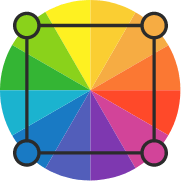
Square color schemes are like tetradic arranged in a square instead of rectangle. Colors appear even more contrasting.
Alternatives to #A65838 color
View adjacent and very similar colors.
Nearest named colors to #A65838
The closest officially registered color names in the Register, ordered by similarity — your shade’s neighborhood is already being claimed.

#A85335
#A85533
#A4613A
#9F5233
#AF593E
#AB6134
#9D523B
#AD603C
#9D5432
#A1623B
#9E5B40
#A6602F
#A65838 color backgrounds & wallpapers
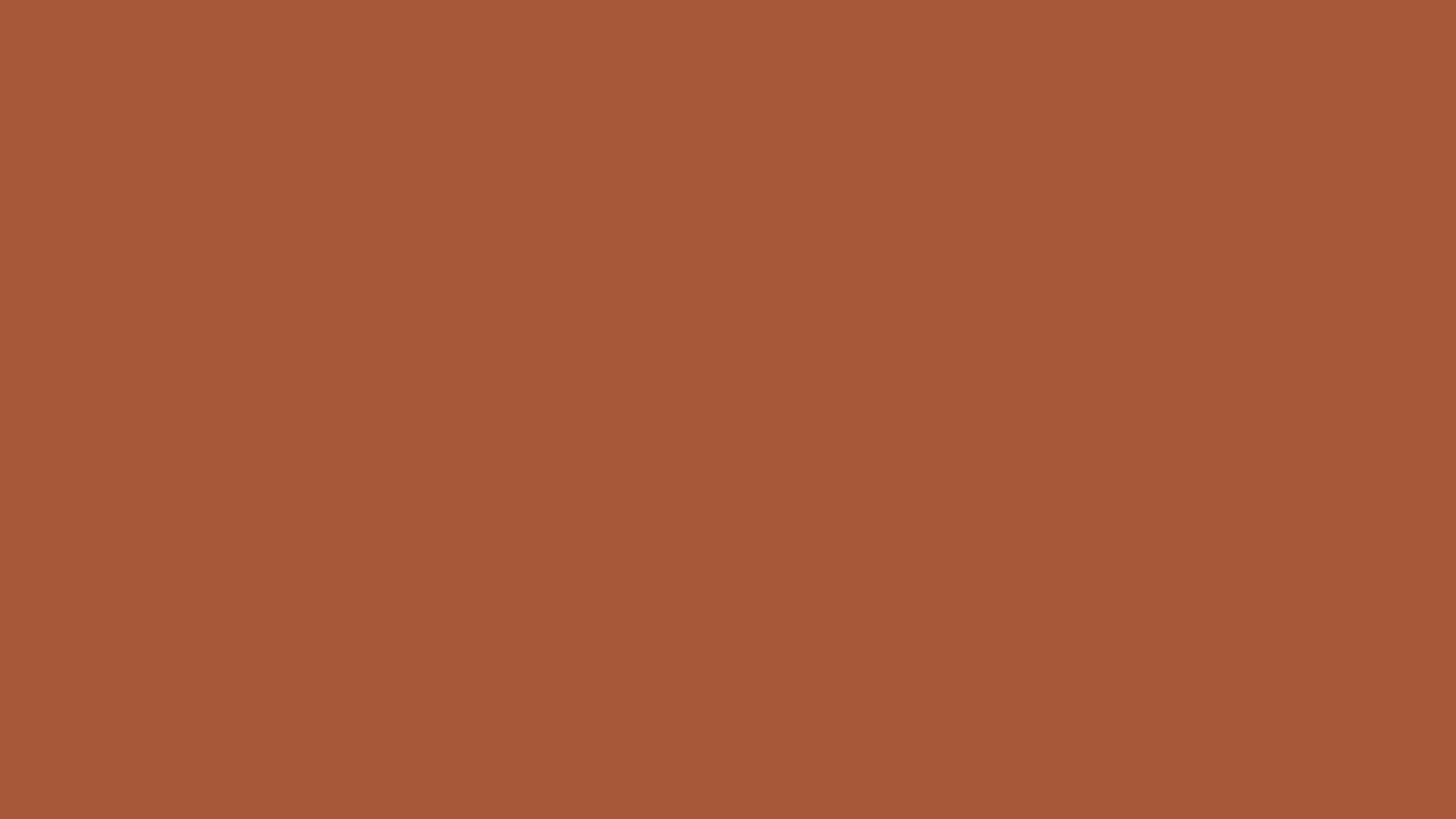
Download color wallpaper / background for your Desktop PC, Tablet or Mobile phone.

Conversions between color systems and etc.
- HEX#A65838
- RGB166, 88, 56
- CMYK0, 47, 66, 35
- CSSrgb(166, 88, 56)
- HSL17°, 50%, 44%
- HSL Precise17.455°, 49.55%, 43.529%
- HSV17°, 66%, 65%
- HSB17°, 66%, 65%
- Normalized R (0.0–1.0)0.651
- Normalized G (0.0–1.0)0.345
- Normalized B (0.0–1.0)0.220
- GLSLvec3(0.651, 0.345, 0.220)
- GLSL with alphavec4(0.651, 0.345, 0.220, 1.000)
- HLSL / Metalfloat3(0.651, 0.345, 0.220)
- Percentage of Red in RGB65.1%
- Percentage of Green in RGB34.5%
- Percentage of Blue in RGB22%
- Color FamilyOrange
- Saturation FamilyModerate Saturation
- Lightness FamilyLight
- HEX IDA65838
- DECIMAL ID10901560
- Name LengthThis color has no name
- Seen by search & AI crawlers15 times
- Counting from2025-01-01
